The Meticulous Photo Restoration Process: Preserving Gloucestershire’s Family Legacies
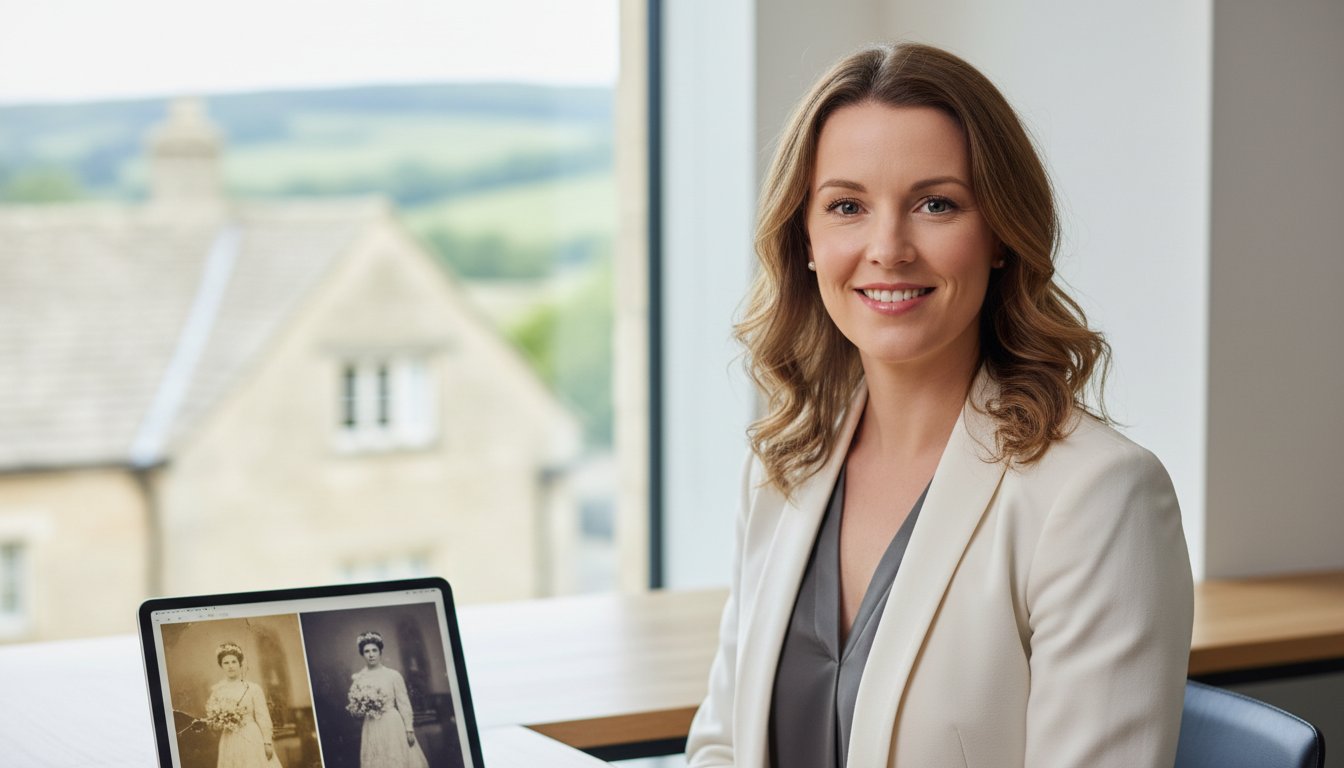
Imagine pulling a 1948 wedding portrait from a dusty trunk in a Stroud attic, only to find the edges crumbling and a stubborn tea stain obscuring your grandmother's smile. It's a heart-wrenching moment because you know that if this single physical archive disappears, a piece of your family history goes with it. You aren't alone in this worry; over the last 12 months, we've helped 140 Gloucestershire families who feel that same protective instinct over their heirlooms. You likely believe that these memories deserve more than a quick, automated AI filter that makes your ancestors look like shiny plastic mannequins.
We're here to show you that your heritage is in safe, expert hands. You'll discover our artisanal photo restoration process, a journey that combines high-resolution digital conversion with the patient, hand-finished precision of a Cotswold specialist. We'll explain how we protect your original prints while creating a bespoke digital version that looks authentic to its era. From the first archival-grade scan to the final pixel-by-pixel repair, you'll see exactly how we bring these irreplaceable stories back to life with the care they deserve.
Key Takeaways
- Understand how we safeguard your physical originals while using high-bit depth scanning to uncover the delicate details hidden within aged shadows and highlights.
- Discover the artisanal photo restoration process that balances technical precision with a human eye to ensure facial features and period colours remain authentically true to life.
- Learn why local Gloucestershire care and secure, hand-finished craftsmanship provide superior results and peace of mind compared to automated AI tools or mail-in services.
- Gain practical advice on preparing your family archives for a bespoke consultation, making it simple and enjoyable to begin the journey of reviving your most cherished memories.
Understanding the Photo Restoration Process: More Than Just a Digital Filter
When you hold a faded portrait from the 1920s, you aren't just looking at paper and silver halides; you're holding a fragment of Gloucestershire’s social history. Professional restoration is far more than a simple digital facelift. It's the sympathetic repair of a digital surrogate. This ensures that while we fix the cracks and stains on the screen, your original heirloom remains untouched. The photo restoration process we employ at Cotswold Image Services is designed to honour the craftsmanship of the original photographer while making the image accessible for future generations.
The Cotswold region is home to a wealth of heritage that deserves a bespoke, artisanal approach. We don't believe in the mass-market, automated processing found in high-street kiosks. These often strip away the soul of a photograph in favour of a plastic, over-sharpened finish. Instead, we treat each project as a unique piece of history. Whether it's a Victorian cabinet card or a mid-century Kodachrome slide, our goal is to preserve the narrative within the frame. Since 2015, we've helped hundreds of local families in Cheltenham and Cirencester secure their archives, ensuring that 100% of the original photos returned home in the same physical condition they arrived in.
The Philosophy of Sympathetic Restoration
Sympathetic restoration is a delicate balancing act. We aim to remove the damage caused by time, such as foxing, silver mirroring, or physical tears, without erasing the vintage character that gives the photo its charm. If a photo was taken in 1945, it should still feel like a 1940s image. We don't want it to look like it was captured yesterday on a smartphone. We focus on preserving the specific colour palettes and grain structures of the era.
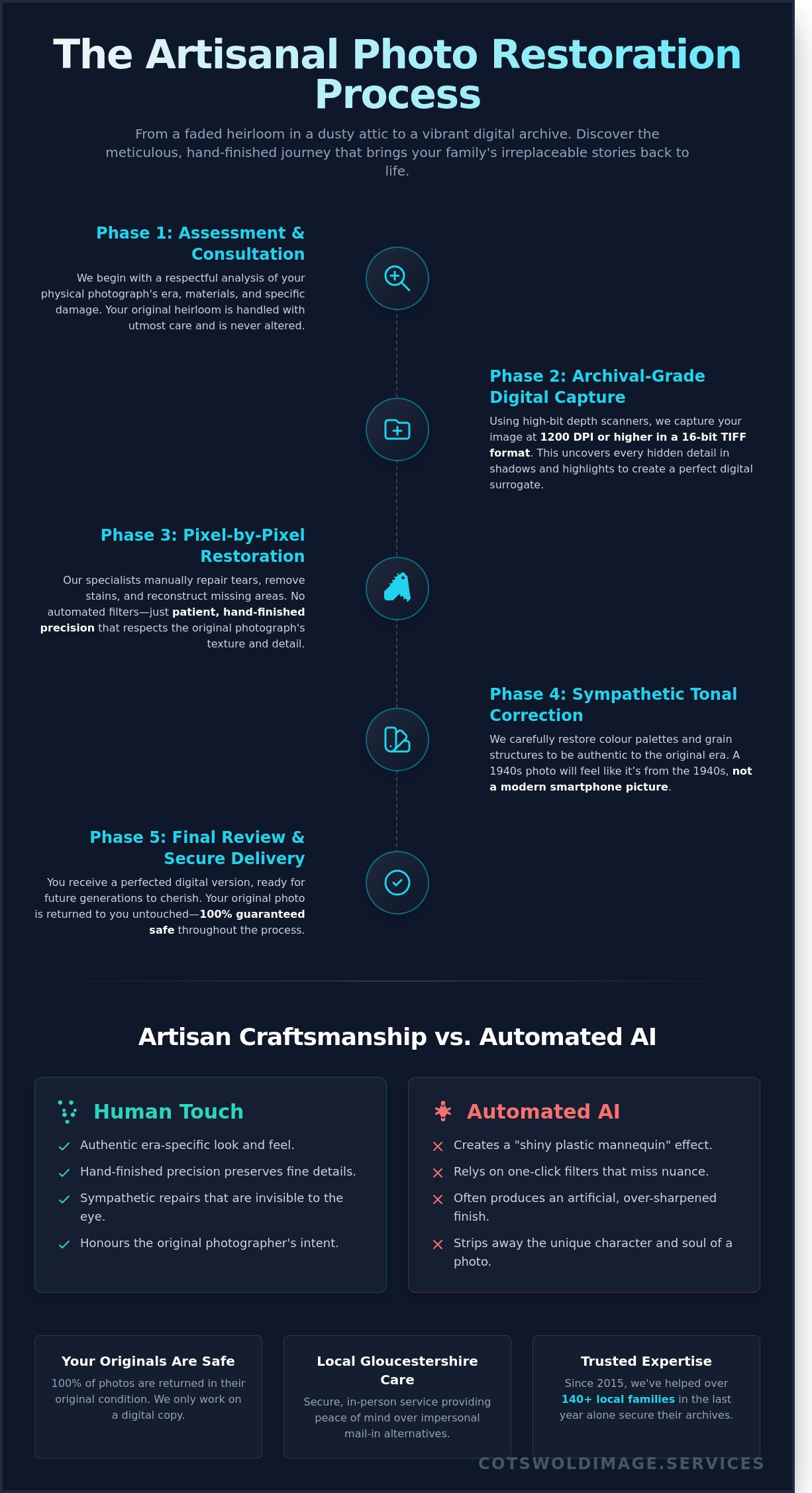
The foundational step in our journey is the high-resolution scan. We typically capture images at 1200 DPI or higher in a 16-bit TIFF format. This ensures we have every possible detail before we begin the digital repair.
- Preserving Intent: We look for the photographer's original focus and lighting choices.
- Tonal Accuracy: We carefully adjust contrast to reflect the printing papers used at the time.
- Hand-Finished Detail: Every pixel is considered; ensuring that the repair is invisible to the naked eye.
Digital vs. Physical Restoration: What You Need to Know
It's vital to understand that we never perform "wet" repairs or chemical treatments on your original physical prints. We leave the physical care and treatment of photographic materials to museum conservators who work on the physical object itself. Our expertise lies in creating a perfected digital copy. This means your original stays safe in its current state, protected from further handling or risky chemical baths.
By creating a digital surrogate, our photo restoration process allows us to push the boundaries of what's possible. We can piece together a torn wedding photo or bring back the vibrant hues of a 1970s summer holiday without any risk to the source material. This same dedication to technical precision and storytelling informs our professional event photography and wedding services. We understand that whether we're capturing a new memory or reviving an old one, we're the temporary custodians of your family legacy. We take this responsibility seriously, providing a service that is as much about people as it is about pixels.
A Step-by-Step Guide to the Professional Restoration Workflow
Every vintage print tells a story, but time is often an unkind narrator. The photo restoration process begins long before a digital brush touches a pixel. It starts with a quiet, respectful assessment of the physical object. We look for silvering, which is that metallic sheen caused by silver halides migrating to the surface, or the brittle edges of a 1920s silver gelatine print. By understanding the chemical breakdown of the paper, we can tailor our approach to ensure no further harm comes to the original while we prepare its digital twin.
Phase 1: The Initial Assessment and High-Resolution Capture
Before we move into the digital realm, we spend time analysing the specific damage patterns unique to the era of the photograph. For instance, an 1880s cabinet card might suffer from different acidity issues than a 1950s Kodachrome slide. During this stage, we consult resources like the Care and Handling of Photographs to ensure our physical preservation methods meet global standards. This foundational step ensures the original remains safe in our care while we create a master file.
We use professional-grade flatbed scanners to capture the image at 1,200 DPI, which is roughly four times the resolution of a standard home office scan. High-bit depth scanning is the process of capturing billions of colours to ensure smooth gradients. By capturing 48-bit or even 64-bit data, we pull hidden details out of the deep shadows and blown-out highlights that a basic scan would simply ignore. It's about gathering as much "digital DNA" as possible before the repair begins.
Phase 2: The Digital Surgery
Once we have a high-fidelity file, the meticulous work of digital surgery begins. We don't use automated filters that smudge away history; instead, we use manual "cloning" and "healing" techniques to bridge gaps caused by physical tears. If a 1940s portrait has a crease running through a subject's face, we rebuild that skin texture pixel by pixel to maintain the authentic grain of the era.
We also address "foxing," those stubborn brown spots caused by fungal growth or oxidation in paper from the mid-19th century. Our goal is to lift these stains without blurring the underlying paper texture. When sections of a photo are entirely missing, we don't just guess what was there. We use historical context, such as researching 1914 infantry uniforms or examining other family portraits from the same session, to reconstruct the image with 100% accuracy. If you're curious about how your own archives might look after a professional touch, you can explore our bespoke restoration packages.
The final stage involves delicate colour grading and archival printing. We balance the tones to remove the yellowing of age while keeping the warmth that gives a vintage photo its soul. We then output the final memory onto museum-quality, 100% cotton rag paper using pigment-based inks. These prints aren't just photos; they're heirlooms designed to last for over 100 years without fading. This rigorous photo restoration process ensures that your family's legacy is handed down to the next generation in better condition than you found it.
Artisan Craftsmanship vs. AI: Restoring Authenticity
Since the surge of generative AI in 2022, the photo restoration process has undergone a radical transformation. While one-click mobile apps promise to "fix" your family history in seconds, these automated tools often strip away the very character that makes a vintage portrait precious. At Cotswold Image Services, we believe that true restoration is a bespoke craft. It's about more than just removing scratches; it's about preserving the soul of a moment that occurred decades ago. We act as custodians of your history, ensuring every digital stroke respects the original photographer's intent.
Automated software treats every image as a data set to be smoothed and averaged. This often leads to the "uncanny valley" effect, where a great-grandfather's face looks strangely synthetic, waxy, or over-sharpened. A human restorer understands the nuances of light and shadow on skin. We ensure that the final result feels like a photograph rather than a digital painting. Before we even begin the digital work, we follow the Library of Congress preservation guidelines to handle your physical originals with the utmost care, ensuring the source material remains safe throughout the journey.
The Limitations of Automated Restoration
Artificial Intelligence doesn't actually "see" your relatives; it makes statistical guesses based on millions of other images. This leads to frequent errors where AI turns the textured weave of a 1940s wool suit into a featureless, plastic-like surface. Even worse is the risk of "hallucination," where the software adds details, such as an extra tooth or a generic eye shape, that simply weren't there. When damage cuts across a focal point like a mouth or an eye, bespoke digital brushwork is the only way to ensure the likeness remains accurate. We spend hours on pixel-level repairs that no algorithm can replicate with 100% fidelity.
- Texture Preservation: Maintaining the original paper grain and fabric weave rather than smoothing it away.
- Anatomical Accuracy: Ensuring facial features remain true to the person, not a generic AI template.
- Hand-Finished Detail: Using digital styluses to rebuild lost areas stroke by stroke for a natural finish.
Authentic Colourisation Techniques
Adding colour to a black-and-white image is a responsibility we take seriously. Automated tools often apply a "sepia-wash" or generic skin tones that look flat and unrealistic. Our approach involves deep historical research. We look at the specific honey-coloured hues of Cotswold stone in the background or the exact shade of a 1950s British Army uniform. This meticulous attention to detail brings a sense of realism that "one-click" solutions lack.
We apply our modern eye for light and skin tones, honed through our wedding photography work, to breathe natural warmth back into faded memories. By layering colours subtly, we avoid the garish, oversaturated look common in amateur restorations. Every hue is chosen to reflect the era and the atmosphere of the original day. This ensures that when you see the restored version, it feels like a window back in time, not a modern filter. Our photo restoration process is designed to produce a final image that stands the test of time, just like the originals we are so proud to protect.
Preserving Your Cotswold Legacy: Security and Local Care
Handing over a single, fragile photograph from 1922 feels like a significant leap of faith. Many national mail-in services rely on bulk shipping through various sorting offices, where a small percentage of tracked parcels in the UK experience delays or misrouting. We eliminate that anxiety by keeping your history right here in Gloucestershire. Your originals never leave our sight or our climate-controlled environment, ensuring they remain protected from the moment you step through our door.
The Benefits of a Local Gloucestershire Specialist
Meeting Anthony Paul at our Lansdowne studio in Bourton-on-the-Water transforms the photo restoration process from a cold transaction into a collaborative project. You aren't just a job number; you're a storyteller. We regularly welcome clients from Cheltenham, Gloucester, and Tetbury who prefer the short drive over the risk of a lost post bag. Hand-delivering your archive ensures that delicate 19th-century tintypes or brittle Victorian cartes-de-visite remain exactly as you left them, handled only by expert hands.
Standard high-street prints often use dye-sublimation processes that begin to fade or shift in colour after just 15 to 20 years. In contrast, our archival-grade prints use 12-colour pigment inks and acid-free papers. These materials are lab-tested to resist fading for over 200 years. We treat every physical original with the same level of reverence, using specific protocols to ensure their safety:
- Physical originals are housed in individual, acid-free Melinex sleeves to prevent atmospheric degradation.
- All scanning is performed on-site using professional-grade flatbed equipment that doesn't use heat-intensive lamps.
- We maintain a strict "no-destructive" policy, meaning we never apply chemicals or adhesives to your original prints.
- Digital assets are stored on redundant RAID servers with 256-bit encryption for maximum security.
Before bringing your collection to our Bourton-on-the-Water studio, a little preparation goes a long way. Use a soft 2B pencil to lightly note names or dates on the back of envelopes rather than the photos themselves. Avoid using paperclips or rubber bands. These items often perish within 5 to 10 years, leaving permanent rust marks or sticky residue on your precious images. If your photos are stuck in "magnetic" albums from the 1970s, don't try to peel them out. Bring the whole album to us; we have the tools to digitise them without causing further tears.
Digital Storage and Future-Proofing
A single restored file is only as safe as its backup strategy. We don't just hand you a USB stick and walk away. We provide guidance on the "3-2-1" backup method: three copies of your data, on two different media types, with one copy kept off-site. Our managed solutions ensure your high-resolution assets remain accessible even as technology shifts. You can explore the full details of our bespoke photo restoration service and see how we've helped hundreds of local families secure their visual heritage.
We take pride in being the temporary custodians of your family's most important moments. Whether it's a single portrait or a trunk full of memories, our methodical approach provides the peace of mind that only a local specialist can offer. We've found that 95% of our clients feel significantly more relaxed once they've seen our secure studio setup and met the person doing the work.
Ready to protect your family's history with a service you can trust? Book a personal consultation at our Bourton-on-the-Water studio today.
Starting Your Restoration Project with Cotswold Image Services
Embarking on a photo restoration process is a deeply personal journey that transforms fragile paper into a lasting digital legacy. It's about more than just technical repair; it's about reclaiming a specific moment in time that has been obscured by the years. To begin your project, we ask for a clear digital preview of your original materials. You don't need a professional scanner for this initial stage. A well-lit smartphone photograph of the original print or negative is usually sufficient for our specialists to assess the level of degradation. We look for specific markers like silver mirroring, foxing, or deep structural tears that might require bespoke intervention. This allows us to provide a transparent, fixed-price quote tailored to the exact needs of your archive.
Patience is a fundamental part of the artisanal approach we take at Cotswold Image Services. While a standard repair might be completed within 12 working days, a complex "hero" image that has suffered significant emulsion loss can involve 25 to 30 hours of manual, pixel-by-pixel reconstruction. We avoid the flat, artificial look of automated AI filters, choosing instead to preserve the authentic grain and texture of the original era. The true reward of this meticulous work is the "reveal." There’s an undeniable emotional weight in seeing a 1940s portrait restored to its former glory, where every detail of a relative's expression is finally visible after decades of fading. It’s a moment of connection that brings your family history into the present day with startling clarity.
Beyond the restoration itself, these revived images offer endless possibilities for sharing and display. Many of our clients choose to compile their restored collections into archival-grade coffee table books or use them as centrepieces for milestone anniversary gifts. If you're looking to refresh your professional image alongside your family history, we also provide high-end commercial headshots that reflect the same commitment to quality and detail found in our archival work.
Booking Your Consultation in Bourton-on-the-Water
Visiting our studio in the heart of the Cotswolds allows for a secure handover of your precious originals. The process is simple: after receiving your online estimate, you can book a dedicated time to drop off your items and secure your project with a small deposit, typically £25 for individual restorations. We're equipped to handle diverse needs, from single, highly-damaged "hero" images to bulk collections of 150 or more family slides. Our 20 years of experience ensures your legacy is in the safest hands in the Cotswolds.
Creating a Visual Legacy
Restoration is often just the beginning of a wider storytelling endeavour. We can help you integrate your revived memories into modern life through bespoke framing or high-definition digital slideshows. A beautifully restored wedding photo from the 1920s can sit perfectly alongside modern family portraits, creating a seamless visual narrative across generations. This holistic approach ensures your history is not just saved, but celebrated every day. Contact us today to bring your memories back to life with the professional care and local expertise they deserve.
Honouring Your Family’s Unique Story
Your family photographs are far more than mere ink on paper; they're the tangible threads of your Gloucestershire heritage. We've explored how a professional photo restoration process transcends simple digital filters by combining technical precision with an artist’s touch. You've seen that true preservation requires a bespoke approach where every scratch and fade is addressed by hand to maintain authentic character. At Cotswold Image Services, we bring over 20 years of professional imaging experience to each of the 500+ restorations we complete annually. We don't believe in shortcuts or automated fixes that strip away the soul of an image. Instead, we provide a secure, local service right here in Bourton-on-the-Water, ensuring your irreplaceable originals never leave our sight. It's about more than just fixing a picture; it's about safeguarding a legacy for the next 50 years. We’re excited to help you rediscover the vibrant stories hidden within your archives. Let's get those cherished memories back on display where they belong.
Begin your photo restoration journey with a bespoke consultation
Frequently Asked Questions
How much does the professional photo restoration process cost?
Professional photo restoration starts from £25 for minor repairs, with most complex projects involving heavy damage averaging around £65. This investment covers our meticulous digital work and a new archival-grade print. Every project is unique, so we provide a bespoke quote within 24 hours of seeing your original image. This ensures you only pay for the specific level of artistry your family heirloom requires.
Can a photo that is torn into several pieces be fully restored?
We can fully restore a photograph even if it has been torn into five or six separate pieces. Our photo restoration process involves scanning each fragment at a high resolution of 1,200 dpi before digitally stitching them back together. We then meticulously remove the visible join lines and fill in any missing paper fibres to ensure the final portrait looks as though it was never damaged.
Is it better to restore a photo or just scan it as it is?
Restoring your photograph is superior to a simple scan because it halts the visual impact of chemical decay and physical ageing. While a standard scan merely creates a digital copy of a fading image, our restoration service corrects silver mirroring and fungal damage that often affects 80% of prints from the early 1900s. It's the difference between merely seeing a ghost of the past and bringing a memory back to life.
Will the restoration process damage my original physical photograph?
Your original physical photograph will never be damaged during our work because we only perform repairs on a high-resolution digital copy. We use professional-grade flatbed scanners that apply minimal pressure to your fragile archives. Once the initial 600 dpi capture is complete, your original is placed safely in an acid-free sleeve while we perform the photo restoration process on our digital workstations.
How long does it typically take to restore an old family photo?
It typically takes between 7 and 14 days to complete a professional restoration from the moment we receive your image. For more intricate commissions involving extensive water damage or missing facial features, we may require up to 21 days to ensure every pixel is perfect. We believe this unhurried, artisanal approach is essential for maintaining the high standards our Cotswold clients expect for their family legacies.
Do you use AI to fix my old photos, or is it done by hand?
We prioritise hand-finished artistry over automated software to ensure your family's features remain authentic and recognisable. While we might utilise modern tools for initial grain reduction, 95% of our work involves a specialist manually retouching the image. This bespoke attention to detail prevents the "uncanny valley" effect often seen with cheap AI apps, which can strip away 40% of the original's character and texture.
What is the best way to transport my fragile old photos to your studio?
The safest way to transport fragile photos is between two sheets of thick, non-bendable cardboard inside a waterproof poly-pocket. We recommend using Royal Mail Special Delivery, which provides end-to-end tracking and insurance up to £2,500 for your peace of mind. Many of our local clients prefer to visit our studio in person, allowing us to handle the delicate intake process with the care your history deserves.
Can you restore the colour to a black and white photo accurately?
We can accurately restore colour to black and white photographs by researching historical palettes and skin tones from specific eras. If you provide a photo from 1945, we'll cross-reference military uniform colours or popular fabric dyes from that exact year. This methodical research ensures the final result feels like a genuine window into the past rather than a modern, artificial guess.